Engaging with Sri Lanka’s Business and Economic Leaders
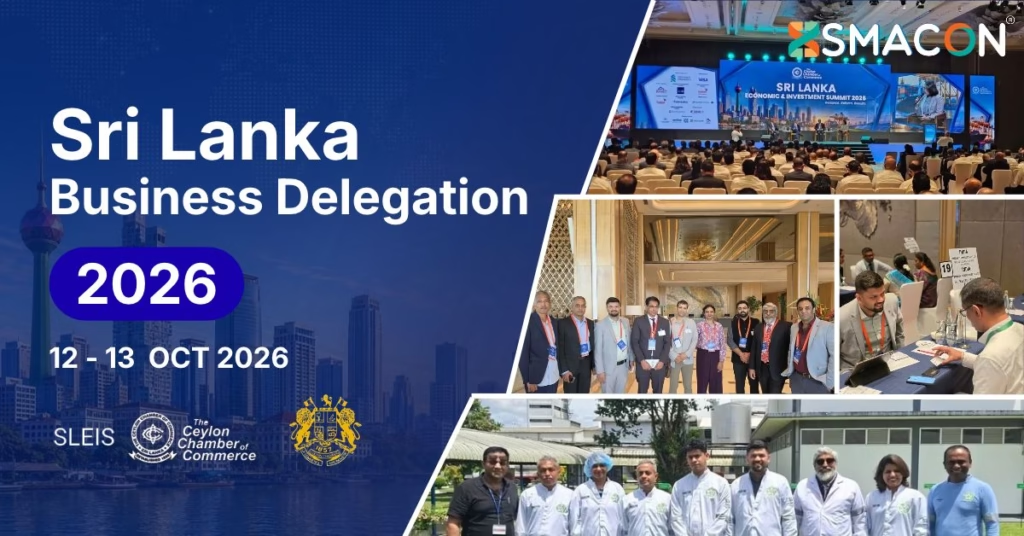
The programme began with the Sri Lanka Economic & Investment Summit 2026, held at the Shangri-La Hotel. The summit brought together Indian delegates, including representatives from the Confederation of Indian Industry (CII), alongside prominent Sri Lankan business leaders to discuss the country’s economic transformation, investment climate, and industrial development.
A key highlight was the fireside chat with His Excellency Mr. Anura Kumara Dissanayake, President of the Democratic Socialist Republic of Sri Lanka. His perspectives on economic recovery, reforms, transparent governance, and sustainable industrial growth provided valuable context for understanding the country’s development priorities.
The summit also created opportunities for direct engagement with Sri Lankan entrepreneurs and business representatives. Discussions covered areas of mutual interest across technology, manufacturing, trade, and professional collaboration.
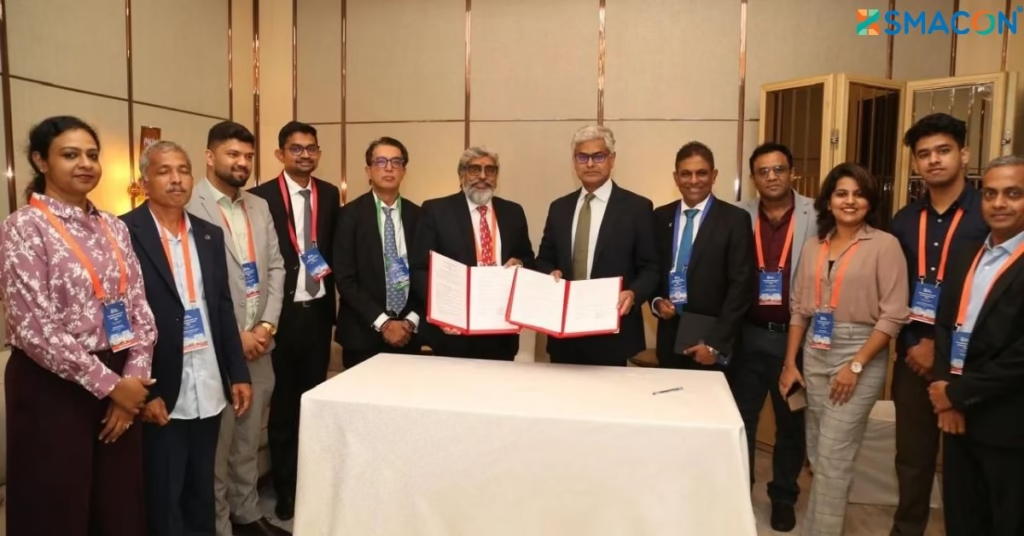
Another important milestone was the signing of a Memorandum of Understanding (MoU) between the Cochin Chamber of Commerce & Industry and the Ceylon Chamber of Commerce. The MoU was signed by Mr. C. S. Kartha (Sasi Kartha), Past President and Executive Committee Member of CCCI, and Mr. Krishan Balendra, Chairperson of the Ceylon Chamber of Commerce, in the presence of senior Chamber representatives, including Mr. Shiran Fernando, Secretary General and CEO.
The agreement marked a significant step towards strengthening business relations and encouraging sustained cooperation between Kerala and Sri Lanka.
The delegation also had the privilege of interacting with senior business leaders associated with Toyota, Maliban Biscuits, and Standard Chartered Bank, gaining further perspectives on the region’s business environment and the priorities of established organisations.
Learning from Established Manufacturing Organisations
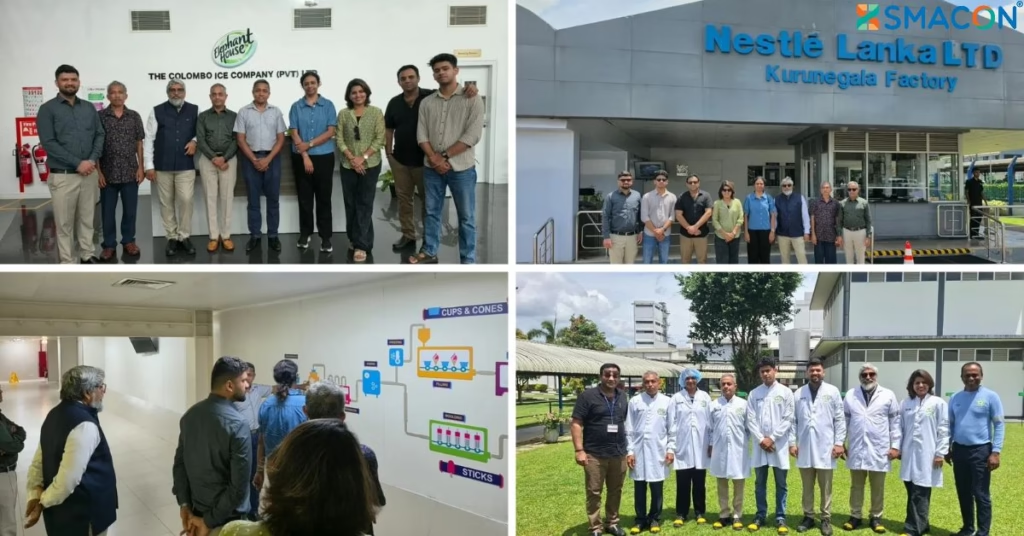
The visits to Nestlé Lanka and Elephant House offered some of the most valuable learning experiences of the programme. Both visits provided a closer look at the operational discipline, quality standards, and continuous improvement practices that support large-scale manufacturing.
At Nestlé Lanka, the team observed the use of spray-drying technology in coconut milk powder production. Beyond the manufacturing process itself, what stood out was the organisation’s approach to continuous improvement, workplace discipline, and employee involvement.
The team was particularly impressed by the use of a DMAIC (Define, Measure, Analyse, Improve, Control) dashboard and an Innovation Dashboard to support performance monitoring and improvement initiatives. The emphasis on cleanliness, hygiene, orderliness, process discipline, and continuous learning reflected a culture in which operational excellence is part of everyday work.
The visit reinforced an important lesson: world-class manufacturing is built not only on technology and equipment, but also on the attitude, commitment, and collective efforts of the people behind the processes.
SMACON extends its sincere thanks to Mr. Samantha Ganethige, Technical Director, Mr. Duminda Gamage from the HR team, and the entire Nestlé Lanka team for their warm welcome and for sharing their knowledge and experience.
The delegation also visited the Elephant House ice cream factory, operated by Ceylon Cold Stores PLC, part of the John Keells Group. The team observed the ice cream manufacturing process, including cone production, production technology, and quality-control practices.
The visit offered useful insights into the coordination and precision required to maintain product quality across large-scale manufacturing operations. It was an opportunity to learn from an established organisation with significant experience in production and supply chain management.
SMACON is grateful to Mr. Sanjeewa Jayasundara, Senior Vice President of John Keells Holdings and Head of Supply Chain Management, and his team for facilitating the visit and sharing their experience.
Discussions on Industrial Development and Investment
Understanding Business Needs and the Potential for Digital Transformation
Throughout the programme, conversations with business leaders provided valuable insight into the operational realities faced by organisations across different sectors. Discussions highlighted challenges around internal processes, vendor coordination, procurement activities, and the need for better visibility and efficiency in day-to-day operations.
These conversations were particularly relevant to SMACON’s work in digital transformation. They helped the team understand the practical issues businesses are working to address and the role technology can play in responding to those needs.
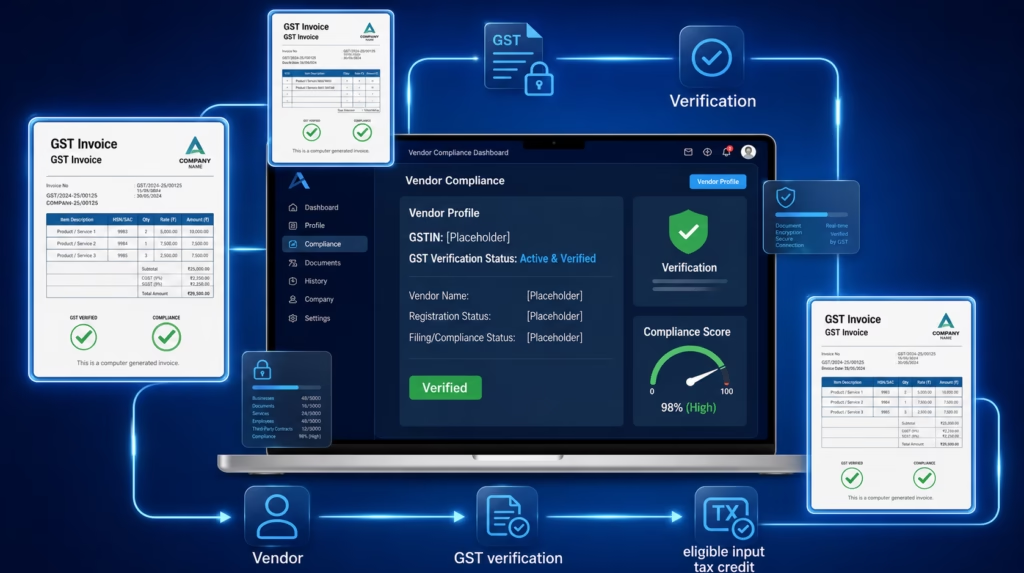
The response to ProcureSmart was especially encouraging. As discussions progressed, it became clear that there is considerable potential for the platform in Sri Lanka, particularly among organisations looking to address operational challenges in procurement and vendor management.
The conversations were not simply about introducing a solution. They offered a chance to understand the difficulties businesses encounter in their existing processes and the areas where better coordination, greater visibility, and more effective digital systems could make a meaningful difference.
For SMACON, these insights were among the most valuable outcomes of the programme. They highlighted the relevance of practical digital transformation in addressing real business needs and provided a positive foundation for further conversations in Sri Lanka.
The engagement also reinforced an important principle: meaningful technology adoption begins with understanding how organisations operate, where their challenges lie, and what they need to improve.
A Meaningful Experience for SMACON
The Sri Lanka programme was much more than a series of official meetings and industry visits. It was an opportunity to learn directly from experienced business leaders, understand the priorities of an evolving economy, and appreciate the people and practices behind established organisations.
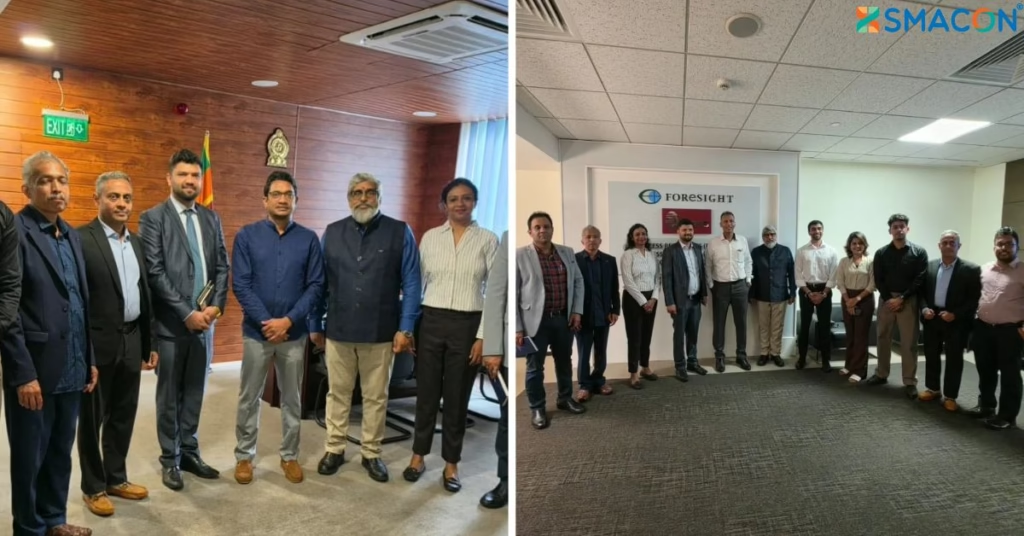
From the economic discussions at the summit and the historic MoU between the two Chambers to the manufacturing insights at Nestlé Lanka and Elephant House, each interaction contributed a different perspective. The meetings with government representatives, investment authorities, and business organisations further strengthened the team’s understanding of Sri Lanka’s industrial and commercial landscape.
Above all, SMACON feels privileged to have been part of this delegation and is grateful for the hospitality, openness, and generosity extended by everyone who welcomed the team. The experience strengthened the value of professional relationships built through shared learning and genuine dialogue.
SMACON looks forward to carrying these learnings forward, maintaining the connections made during the programme, and continuing conversations that can contribute to meaningful business and technology collaboration between India and Sri Lanka.