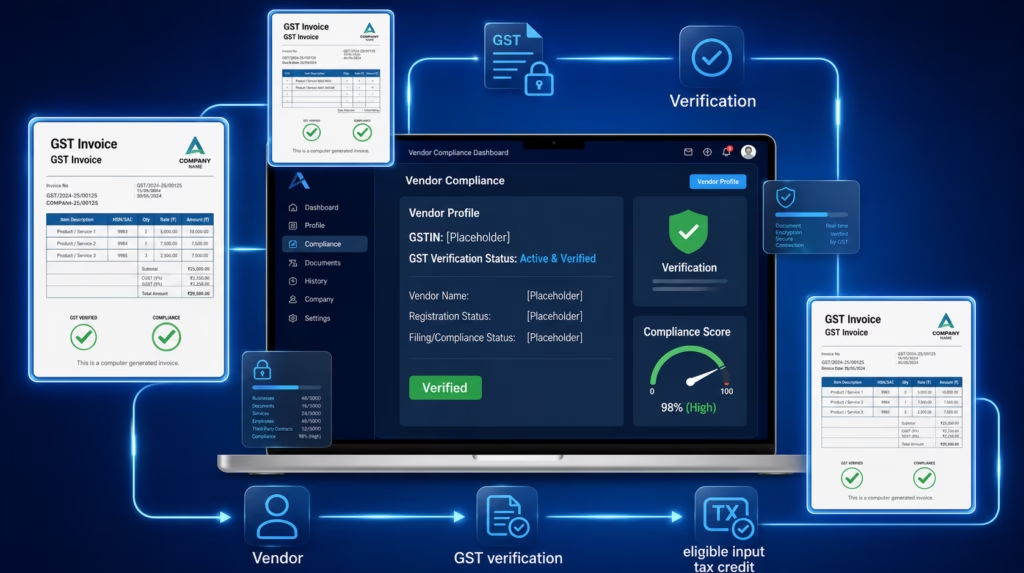
For businesses that purchase goods from hundreds of suppliers, managing GST compliance can be just as important as managing the purchase itself.
A GST invoice may be received, the goods may be delivered, and the payment may be completed. But if the supplier does not meet the required GST compliance and reporting requirements, the buyer may face difficulties in claiming the eligible Input Tax Credit (ITC).
This can become a serious concern for businesses that make frequent purchases from multiple vendors.
When Hundreds of Vendors Become a Compliance Challenge
Consider a business that sources products from different markets across India. The business may purchase from manufacturers, mills, distributors, wholesalers, and small suppliers.
A single product category could involve hundreds of vendors.
For example, a business dealing in high-value products such as sarees may purchase from a large number of suppliers. Even a purchase of 1,000 sarees could involve hundreds of individual vendors.
Each purchase may come with a GST invoice and the required transaction documentation. The buyer pays the vendor, including the applicable GST, and expects to claim the eligible input tax credit.
But there is another side to the transaction.
The supplier also has GST compliance responsibilities.
What Happens When the Supplier Doesn't Report the Transaction?
When a buyer pays GST to a supplier, the buyer expects that amount to become eligible ITC, subject to the applicable GST rules and conditions.
However, if the supplier does not correctly report the transaction or does not meet the required filing requirements within the relevant timeline, the buyer may not be able to claim the credit when expected.
This creates a gap between:
GST already paid to the vendor
and
GST input credit available to the buyer
For a business dealing with hundreds of vendors, even small delays across multiple suppliers can have a noticeable impact on working capital.
A Simple Example
Suppose a company purchases a computer for ₹1,00,000 plus ₹18,000 GST.
The company pays the vendor ₹1,18,000, including the GST amount.
The company later makes a taxable sale and has a GST liability of ₹18,000.
Under the applicable GST provisions, the purchase GST may be available as eligible ITC and can be used to set off the output tax liability, subject to the required conditions.
But if the supplier has not properly reported the transaction, the buyer may not be able to claim that ITC as expected at that time.
The company has already paid the ₹18,000 GST to the vendor, but may still have to arrange funds for its GST liability.
This is where cash flow gets affected.
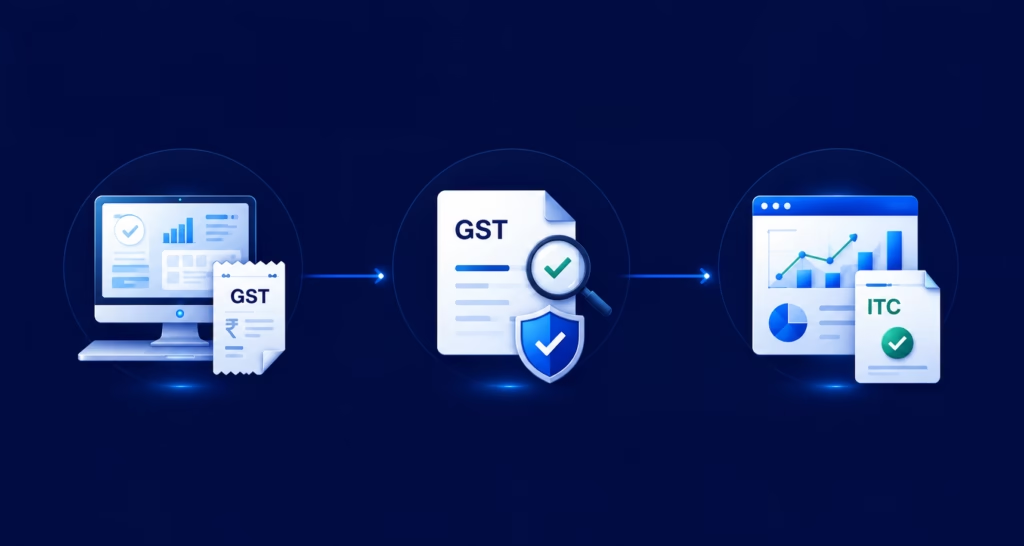
The Problem Starts Before the GST Return
For businesses with a large vendor base, checking GST compliance only after a problem occurs is not enough.
The better approach is to assess the vendor before onboarding and purchasing.
Vendor evaluation can include GST-related information and compliance indicators that help the business understand whether a supplier is likely to maintain the required compliance standards.
Instead of simply asking:
“Is this vendor GST registered?”
businesses should also consider:
“Is this vendor maintaining the compliance required for our transactions?”
Why Vendor Evaluation Matters
A structured vendor evaluation process can help businesses identify potential compliance concerns before they become a recurring issue.
It can help businesses:
- Check vendor GST details
- Review compliance information
- Identify potential reporting risks
- Make better vendor onboarding decisions
- Reduce manual compliance checks
- Protect working capital linked to eligible ITC
This becomes particularly important when a business works with a large number of small and high-volume suppliers.
From Vendor Selection to Compliance Management
GST compliance should not be treated as something that finance teams look at only during return filing.
It can become part of the vendor evaluation process itself.
By assessing relevant GST compliance information during vendor onboarding, businesses can make more informed decisions about which suppliers they work with and identify potential risks earlier.
This does not replace regular GST verification or professional tax advice. Instead, it gives procurement and finance teams better visibility when evaluating vendors.
Are Your Vendors Affecting Your GST Input Credit?
For businesses dealing with a large supplier network, vendor compliance can have a direct impact on the availability of eligible input tax credit and, consequently, on working capital.
A GST Vendor Compliance and Evaluation solution can help businesses assess vendors during onboarding, monitor relevant compliance information, and identify potential risks before they affect the business.
If GST input credit from your vendors is frequently delayed or affected, the problem may not be with your purchase process—it may be time to look more closely at your vendors.