Procurement errors are often treated as “normal.”
A delayed approval here. A mismatched invoice there. A missing vendor document during audit.
Most organizations accept these as part of everyday operations.
But in 2026, the margin for error is shrinking.
With higher transaction volumes, tighter compliance expectations, and increased financial oversight, even small procurement mistakes can create operational disruption and financial leakage. This leads to a critical question:
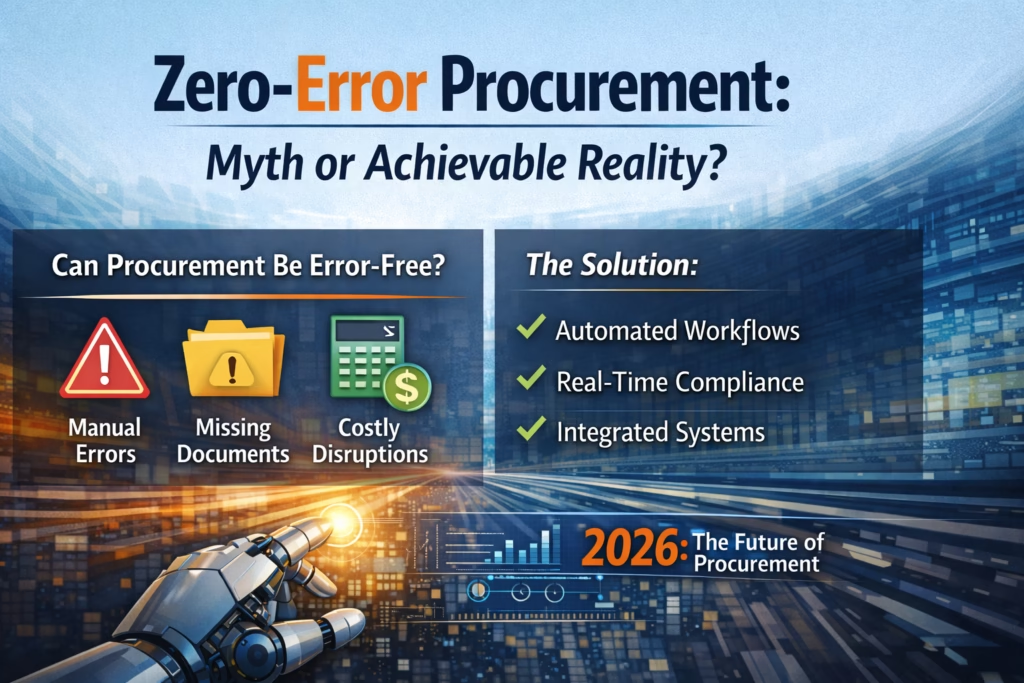
Is zero-error procurement even possible — or is it just an idealistic concept?
Why Procurement Errors Persist
Procurement errors rarely stem from negligence. They happen because processes are fragmented.
When approvals happen over email, vendor records sit in spreadsheets, and purchase orders are managed separately from ERP systems, inconsistencies are inevitable. Manual data entry, disconnected systems, and unclear ownership increase the probability of errors at every stage.
The issue isn’t people — it’s process structure.
The Real Cost of “Minor” Procurement Mistakes
Small procurement errors often go unnoticed until they compound.
A pricing discrepancy can affect margins.
A delayed approval can disrupt production timelines.
Incomplete documentation can trigger compliance stress.
Unverified vendor details can create risk exposure.
Across hundreds or thousands of transactions, even a small error rate becomes significant. Over time, this erodes efficiency, financial control, and stakeholder confidence.
What Zero-Error Procurement Actually Means
Zero-error procurement does not mean flawless human behavior. It means designing systems that prevent avoidable mistakes.
It means approvals are workflow-driven instead of email-based.
It means vendor compliance is validated before transactions occur.
It means purchase orders, goods receipt, and invoices are digitally matched.
It means every action is traceable and audit-ready.
Modern procurement platforms are increasingly built around this principle — replacing fragmented workflows with structured, policy-driven systems.
Solutions like Procure Smart, for example, focus on centralizing procurement processes, automating approval hierarchies, and integrating with ERP environments to reduce manual intervention. The objective is not just efficiency — but error prevention by design.
Technology as a Control Framework
Automation does not eliminate human decision-making; it strengthens it.
By enforcing approval rules, generating system-based comparisons, maintaining vendor documentation, and recording digital audit trails, structured procurement systems significantly narrow the margin for error.
When procurement operates within a controlled framework — supported by intelligent platforms — teams spend less time correcting mistakes and more time making strategic decisions.
From Reactive Correction to Proactive Prevention
Historically, procurement teams corrected errors after they occurred. In modern environments, prevention is becoming the priority.
Organizations that adopt structured procurement platforms experience:
-
Fewer invoice mismatches
-
Reduced compliance gaps
-
Clearer vendor communication
-
Faster audits
- Improved financial predictability
This shift transforms procurement from an operational function into a controlled, reliable environment.
Myth or Achievable Reality?
Absolute perfection may not be realistic. But dramatically reducing procurement errors is.
With structured workflows, automated validations, ERP integration, and centralized vendor management, zero-error procurement moves from aspiration to achievable benchmark.
In 2026, the question is no longer whether errors can be reduced — it’s whether procurement systems are designed to prevent them in the first place.