For many growing enterprises, procurement automation initially appears to be an operational improvement — a way to streamline purchase requests, approvals, and vendor communication.
But organizations that adopt digital procurement platforms often discover something surprising: the investment pays for itself far sooner than expected.
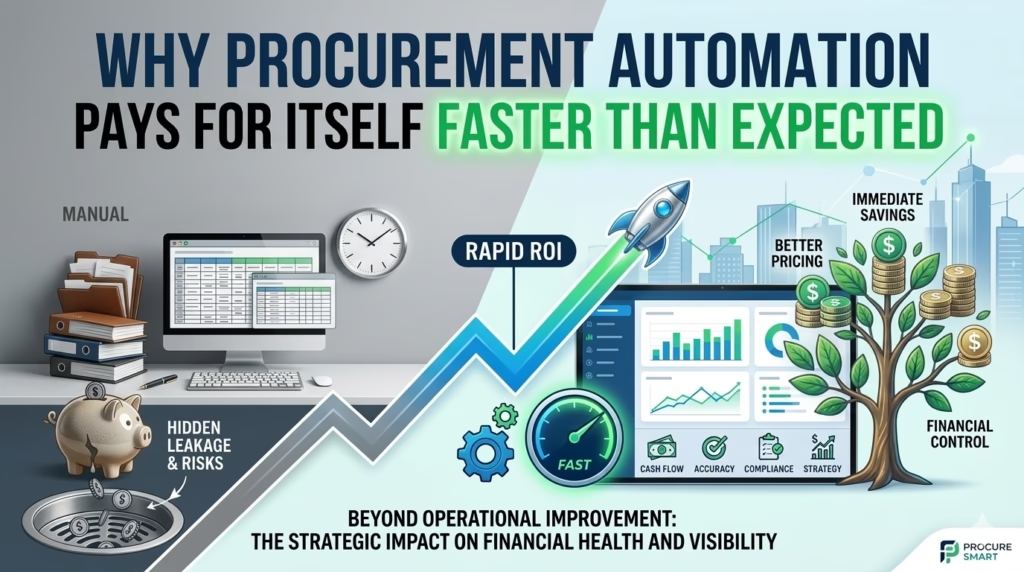
The reason is simple. Manual procurement does not just consume time; it quietly creates financial leakage, inefficiencies, and hidden risks that accumulate across departments. When these inefficiencies are removed through automation, the financial impact becomes visible almost immediately.
The Hidden Costs of Manual Procurement
In many mid-sized and large enterprises, procurement still relies on a combination of spreadsheets, emails, and informal approval processes. While this approach may work at a smaller scale, it begins to create operational friction as the organization grows.
Approval delays slow down projects. Procurement teams spend time following up instead of analyzing spend. Vendor quotations arrive through scattered communication channels, making comparisons difficult. Finance teams struggle to get a clear view of committed spend until transactions are already completed.
None of these issues appear as a single major cost. But together, they reduce efficiency, weaken financial visibility, and limit the organization’s ability to negotiate effectively with suppliers.
Faster Procurement Cycles Create Immediate Savings
One of the most immediate benefits of procurement automation is faster procurement cycles.
Instead of requests moving through email chains, automated workflows route approvals instantly to the right stakeholders. Purchase requests, vendor quotations, and purchase orders are managed within a structured system, reducing delays and eliminating unnecessary follow-ups.
For operational teams, this means fewer disruptions. For procurement teams, it means less time spent coordinating and more time focusing on vendor relationships, cost optimization, and strategic sourcing.
Faster procurement cycles translate directly into measurable operational savings.
Better Vendor Visibility Leads to Smarter Spending
Another major financial advantage of procurement automation is improved vendor visibility.
When vendor data, quotations, and historical transactions are stored in a centralized system, organizations gain a clearer understanding of their purchasing patterns. Procurement teams can compare suppliers more effectively, identify preferred vendors, and avoid duplicate vendor relationships across departments.
This visibility helps enterprises negotiate better pricing and ensure that contracted suppliers are consistently used across the organization.
Over time, these improvements create measurable cost reductions.
Real-Time Procurement Data Supports Financial Control
Procurement automation also improves financial visibility across the organization.
Instead of relying on retrospective reports, finance teams gain real-time access to procurement commitments, purchase orders, and vendor transactions. This allows leadership to understand spending patterns before payments are made.
With better visibility, organizations can manage cash flow more effectively, forecast expenses with greater accuracy, and reduce unexpected financial surprises.
For growing enterprises, this level of financial clarity is critical.
Reduced Compliance and Audit Risks
Manual procurement processes also create compliance challenges.
When approvals happen informally and documentation is scattered across emails and spreadsheets, it becomes difficult to maintain a clear audit trail. Procurement automation solves this by ensuring that every request, approval, and transaction is recorded within a structured system.
This creates a transparent and traceable procurement process that simplifies audits and strengthens internal governance.
For enterprises operating in regulated environments, this benefit alone can justify the investment.
Turning Procurement Into a Strategic Function
Perhaps the most important impact of procurement automation is the transformation of the procurement team’s role.
When repetitive coordination tasks are automated, procurement professionals gain time to focus on strategic activities — such as vendor performance management, cost optimization, and long-term sourcing strategies.
Instead of acting as a transactional department, procurement becomes a strategic contributor to business growth and financial planning.
The Real Return on Procurement Automation
Enterprises often evaluate procurement automation by comparing the cost of software with the cost of manual processes.
But the real return comes from a combination of benefits:
- Reduced operational delays
- Better vendor pricing through visibility
- Improved financial planning
- Lower compliance risk
- Increased productivity for procurement teams
When these factors are combined, many organizations find that procurement automation delivers value far sooner than expected.
Moving Toward a Smarter Procurement Model
As enterprises scale, the limitations of manual procurement become increasingly clear. Automation is no longer just a technology upgrade — it is a foundational step toward building a procurement function that supports growth, transparency, and financial control.
Platforms like Procure Smart help organizations make this transition by digitizing procurement workflows, centralizing vendor management, and providing real-time visibility into purchasing activities.
The result is a procurement process that is faster, more transparent, and aligned with the needs of modern enterprises.