Many businesses still struggle with delayed approvals, invoice mismatches, unclear vendor payments, and audit pressure. Even with ERP systems in place, procurement and finance often operate in silos, relying on emails and spreadsheets to bridge the gap. This is exactly the problem Procure-to-Pay (P2P) automation is designed to solve.
As we move closer to 2026, P2P automation has become essential for organizations that want faster procurement cycles, stronger compliance, and complete visibility from purchase request to vendor payment.
Understanding Procure-to-Pay (P2P) Automation
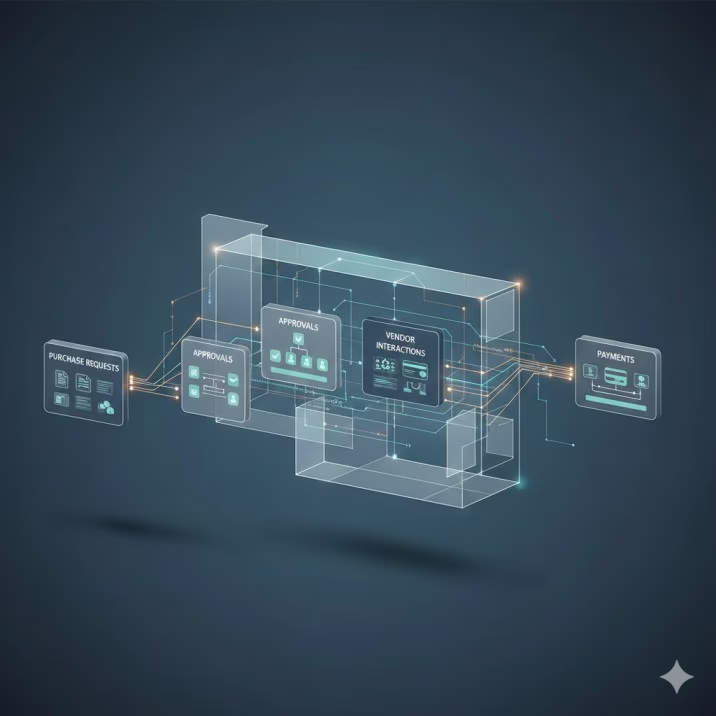
Procure-to-Pay automation refers to digitizing and connecting the entire procurement lifecycle into one continuous workflow. Instead of handling purchasing, approvals, and payments across multiple disconnected tools, P2P automation brings everything into a single system.
A typical P2P process begins when a purchase request is raised and ends when the vendor is paid. In between, approvals, vendor selection, purchase orders, goods receipt, invoice processing, and payment tracking all happen within the same platform. Solutions like Procure Smart ensure these steps are automated, traceable, and aligned with procurement policies
Procure Smart
Why Manual Procure-to-Pay Processes Break Down
Manual P2P processes often look manageable until volumes increase. Approvals get stuck in boxes, invoices don’t match purchase orders, and finance teams spend days reconciling data. Over time, these small inefficiencies turn into serious operational and compliance risks.
Industry studies consistently show that manual procurement increases processing time and error rates significantly. More importantly, it makes audits stressful because there is no single source of truth. When information is scattered across emails, spreadsheets, and folders, accountability becomes unclear.
How P2P Automation Works in Real Business Scenarios
With P2P automation, procurement becomes predictable and controlled. When a purchase request is created, it automatically follows predefined approval rules. Once approved, vendor quotations are collected digitally, comparisons are generated by the system, and purchase orders are issued without manual duplication.
When goods are received, invoices are matched digitally against purchase orders and receipt records. Any mismatch is flagged instantly, preventing overpayments and disputes. Throughout the process, both procurement and finance teams see real-time data, while vendors gain visibility into order and payment status.
Why P2P Automation Matters More in 2026
In 2026, procurement is no longer just an operational function. It plays a direct role in financial control, risk management, and compliance. Regulatory expectations are higher, audits are stricter, and leadership demands clearer visibility into spend and liabilities.
P2P automation supports this shift by creating a connected, audit-ready procurement environment. It reduces dependency on individuals, enforces policies consistently, and allows businesses to scale procurement without losing control.
Key Takeaway
Procure-to-Pay automation is not about adding another tool — it’s about eliminating fragmentation. By connecting procurement and payment into one intelligent workflow, businesses gain speed, transparency, and confidence in every purchasing decision.
Take the Next Step with Procure Smart
If your procurement and payment processes still rely on emails, manual approvals, or disconnected systems, it’s time to move forward.
Procure Smart helps organizations automate the complete procure-to-pay cycle while ensuring compliance, visibility, and seamless ERP integration.
Request a Procure Smart demo to see how P2P automation can transform your procurement operations.