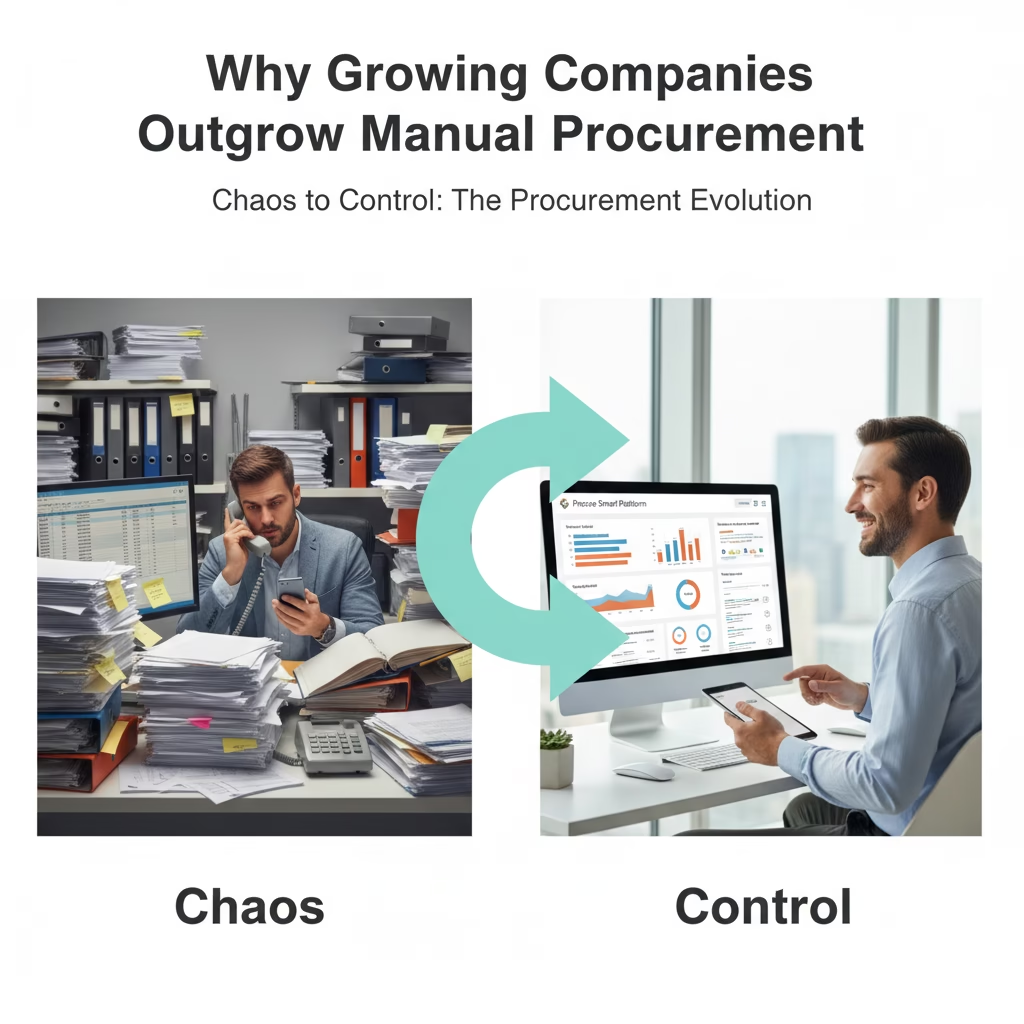
When a company is small, manual procurement feels manageable.
A few vendors. A handful of purchase requests. Approvals over email. Vendor details stored in spreadsheets. At that stage, it works — or at least it feels like it does.
But growth changes everything.
As companies scale, what once felt efficient quickly becomes chaotic. And most organizations don’t realize they’ve outgrown manual procurement until delays, errors, and compliance gaps begin affecting operations.
Growth Increases Complexity — Not Just Volume
Many businesses assume procurement pressure increases only because transaction volume increases. In reality, complexity increases much faster than volume.
With growth comes:
-
More departments raising purchase requests
-
More vendors to onboard and manage
-
Larger contract values
-
Stricter compliance expectations
- Greater financial oversight
Manual systems that worked for 20 transactions per month struggle at 200. Email approvals that once felt quick now create bottlenecks. Spreadsheet tracking becomes unreliable. Follow-ups multiply.
The process doesn’t just slow down — it becomes fragile.
The Hidden Risks of Manual Procurement During Expansion
Scaling companies are often focused on revenue, hiring, and market expansion. Procurement, however, quietly becomes a risk point.
Common issues include:
-
Duplicate or unauthorized purchases
-
Approval confusion as reporting lines expand
-
Vendor documentation gaps
-
Delays affecting production or delivery
- Poor spend visibility for leadership
These issues don’t appear overnight. They surface gradually — and by the time leadership notices, operational friction has already increased. This shift transforms procurement from an operational function into a controlled, reliable environment.
What worked at startup stage rarely supports growth-stage governance.
Manual Procurement Creates Invisible Bottlenecks
In growing organizations, speed is everything. Yet manual procurement often becomes an invisible bottleneck.
Approvals get stuck in inboxes.
Purchase orders are delayed because someone is unavailable.
Finance teams struggle to reconcile invoices manually.
Vendor negotiations lack structured comparison.
The more the company grows, the more manual coordination is required — and that coordination consumes time that teams no longer have.
Growth demands systems that scale. Manual processes do not scale — they stretch.
Why Structured Procurement Becomes Essential
At a certain stage, procurement must move from “functional” to “controlled.”
Growing businesses need:
-
Defined approval workflows
-
Centralized vendor management
-
Real-time visibility into spend
-
ERP-aligned purchase tracking
- Audit-ready documentation
This is where modern procurement platforms come in.
Solutions like Procure Smart are built specifically for companies transitioning from manual coordination to structured automation. By centralizing procurement activities and integrating with ERP systems, growing organizations gain both speed and control — without adding administrative burden.
The Turning Point Most Companies Miss
The critical mistake growing companies make is waiting too long.
They tolerate procurement friction because it hasn’t yet caused a major disruption. But the longer manual processes remain, the harder they become to untangle later.
The best time to modernize procurement is not after errors multiply — it’s when growth begins accelerating.
Final Thought
Growing companies don’t fail because of ambition. They struggle because their internal systems don’t evolve with their expansion.
Manual procurement may support early stages. But scaling demands structure, visibility, and automation.
The real question isn’t whether your company will outgrow manual procurement. It’s whether you’ll recognize the moment before inefficiency turns into risk.