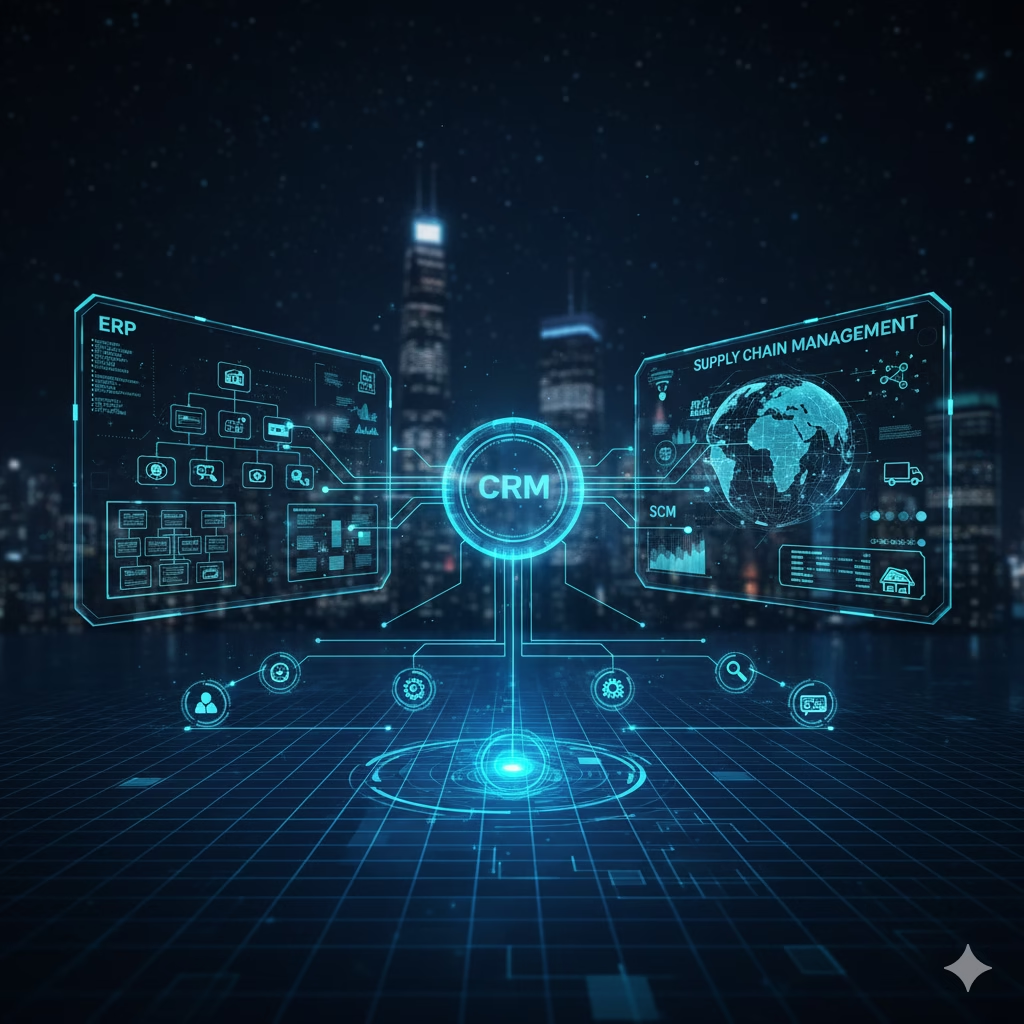
Customer details live in CRM. Orders and billing sit in ERP. Inventory and delivery updates are handled by SCM. Each system works fine on its own, but when a customer asks a simple question like “Where is my order?” or “When will this be delivered?”, teams scramble for answers.
As we head into 2026, this disconnect is no longer acceptable. Businesses are realizing that customer experience breaks down the moment CRM, ERP, and SCM operate in silos.
The Real Problem: Customer Conversations Without Operational Context
CRM systems are great at capturing leads, interactions, and follow-ups. But when CRM isn’t connected to ERP or SCM, customer conversations lack context.
Sales teams may promise delivery dates without knowing stock availability. Support teams may chase operations for order updates. Finance may block orders due to payment issues that sales teams can’t see. None of these are system failures—they’re integration failures.
This is why CRM integration is becoming a priority rather than a future upgrade.
What Changes When CRM, ERP, and SCM Are Connected
When customer management is connected with ERP and SCM, teams stop guessing and start responding with confidence.
A sales executive no longer sees just contact details — they see open orders, billing status, and delivery timelines. A support agent doesn’t have to ask three departments for updates — the information is already available. Operations teams get clearer demand signals based on real customer activity.
The result is simple but powerful: fewer internal handoffs and more reliable customer communication.
Integration Trends Businesses Are Adopting in 2026
One clear trend is the move toward real-time integration. Businesses no longer want delayed updates or manual syncing. Customer-facing teams expect live order status, inventory availability, and payment visibility directly within CRM.
Another shift is toward lighter, API-based integrations instead of heavy, rigid system connections. This allows companies to scale, replace components, or add new workflows without disrupting everything.
There’s also growing attention on automation across systems. For example, when a deal is confirmed in CRM, it can automatically trigger order creation in ERP and fulfillment planning in SCM — without emails, spreadsheets, or follow-ups.
Why This Matters for Customer Experience
Customers don’t care which system holds their data. They care about accuracy, speed, and consistency.
When systems are disconnected, customers experience delays, mixed messages, and repeated explanations. When systems are integrated, customers experience clarity — accurate commitments, proactive updates, and faster resolution.
In 2026, customer trust will depend less on promises and more on system reliability.
How SMACON’s Customer Management Solution Supports This Shift
SMACON’s Customer Management Solution is built with integration in mind. It doesn’t sit in isolation — it connects customer interactions with ERP and supply chain data, ensuring teams work with the same information.
By aligning customer management with operations and finance, businesses can respond faster, communicate clearly, and deliver experiences that feel consistent and dependable.