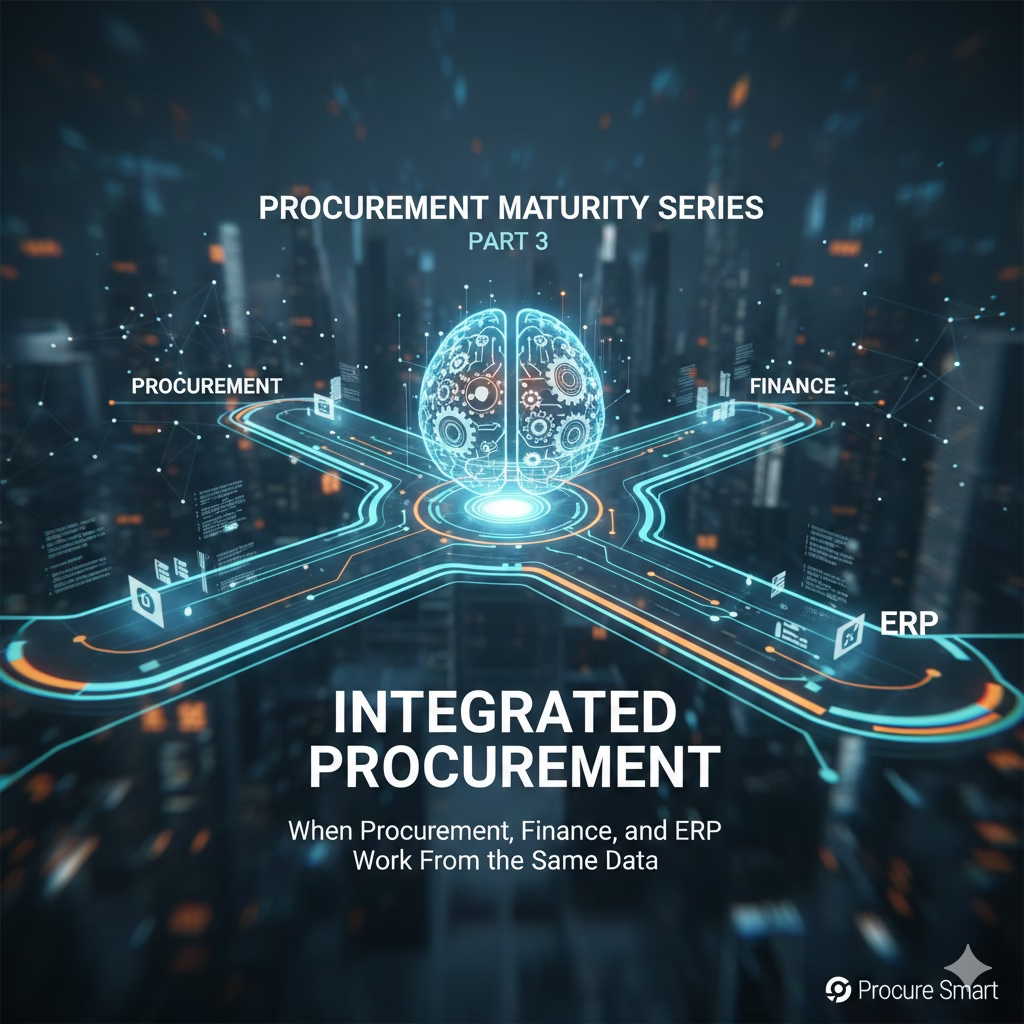
Integrated Procurement: When Procurement, Finance, and ERP Work From the Same Data
For many growing enterprises, reaching the controlled stage brings stability. Approvals follow defined paths, vendor data is centralized, and transactions are traceable.
But a new challenge soon appears.
Procurement has structure — yet critical information still lives in multiple systems.
Finance works in ERP.
Procurement teams work in separate tools or workflows.
Leadership depends on manual reports to understand committed spend.
At this point, procurement is controlled, but not fully connected.
Integrated procurement is the stage where this disconnect disappears.
From Structured Processes to Connected Operations
In a controlled environment, teams follow the right steps.
In an integrated environment, systems share the same reality.
Purchase orders created in procurement reflect instantly in ERP.
Goods receipt and invoice status are visible without reconciliation.
Committed spend updates in real time.
Finance, procurement, and leadership work from a single version of truth.
The shift is subtle in appearance — but transformational in impact.
Instead of asking different departments for data, enterprises begin making decisions based on live, aligned information.
Why Integration Becomes Critical at Enterprise Scale
As organizations grow, the cost of disconnected data increases.
When procurement and ERP are not aligned:
Financial forecasting becomes less accurate.
Manual reconciliation consumes time across teams.
Approval decisions are made without full financial context.
Reporting cycles slow down leadership visibility.
These are not procurement inefficiencies — they are business risks.
Integration removes these gaps by ensuring that every procurement action immediately reflects in the financial and operational core of the organization.
Real-Time Visibility Changes Decision-Making
The biggest transformation in this stage is not operational — it is strategic.
Leadership no longer waits for month-end reports to understand procurement impact.
Finance teams no longer track commitments through spreadsheets.
Procurement teams no longer spend time validating data across systems.
Everyone sees:
● What has been requested
● What has been approved
● What has been ordered
● What has been received
● What is financially committed
And they see it in real time.
This level of visibility allows enterprises to plan with confidence, control cash flow more accurately, and respond faster to business demands.
The Role of Integration in Governance and Compliance
For mid to large enterprises, integration is also a governance requirement.
Audit readiness improves because procurement and financial records are already aligned.
Policy enforcement becomes consistent across systems.
Data discrepancies — one of the biggest causes of audit stress — are dramatically reduced.
Integration ensures that procurement is not just operationally efficient, but financially accountable.
Enabling Integrated Procurement
Reaching this stage requires more than workflows. It requires procurement to work in sync with ERP and finance systems.
This is where platforms like Procure Smart support enterprise maturity — by connecting procurement transactions directly with ERP environments, eliminating duplicate data entry and creating real-time financial alignment.
The objective is not just system connectivity.
It is business clarity.
With integration in place, procurement stops being a separate function and becomes part of the organization’s core decision-making framework.
The Strategic Impact for Growing Enterprises
Integrated procurement changes how enterprises operate.
Forecasting becomes more reliable because committed spend is visible.
Working capital planning improves because financial impact is immediate.
Cross-department disputes reduce because everyone works from the same data.
Procurement moves from a transactional role to a strategic function.
And once this happens, the organization is ready for the next evolution.
What Comes Next
After integration, procurement is no longer just connected — it becomes intelligent.
In the final part of this series, we will explore:
Intelligent Procurement – Where Data Starts Driving Decisions
Because when systems are aligned, procurement gains something even more powerful than control:
Insight.