Reactive Procurement: The Stage Most Growing Enterprises Don’t Realize They’ve Outgrown
In the early stages of growth, procurement rarely feels like a problem.
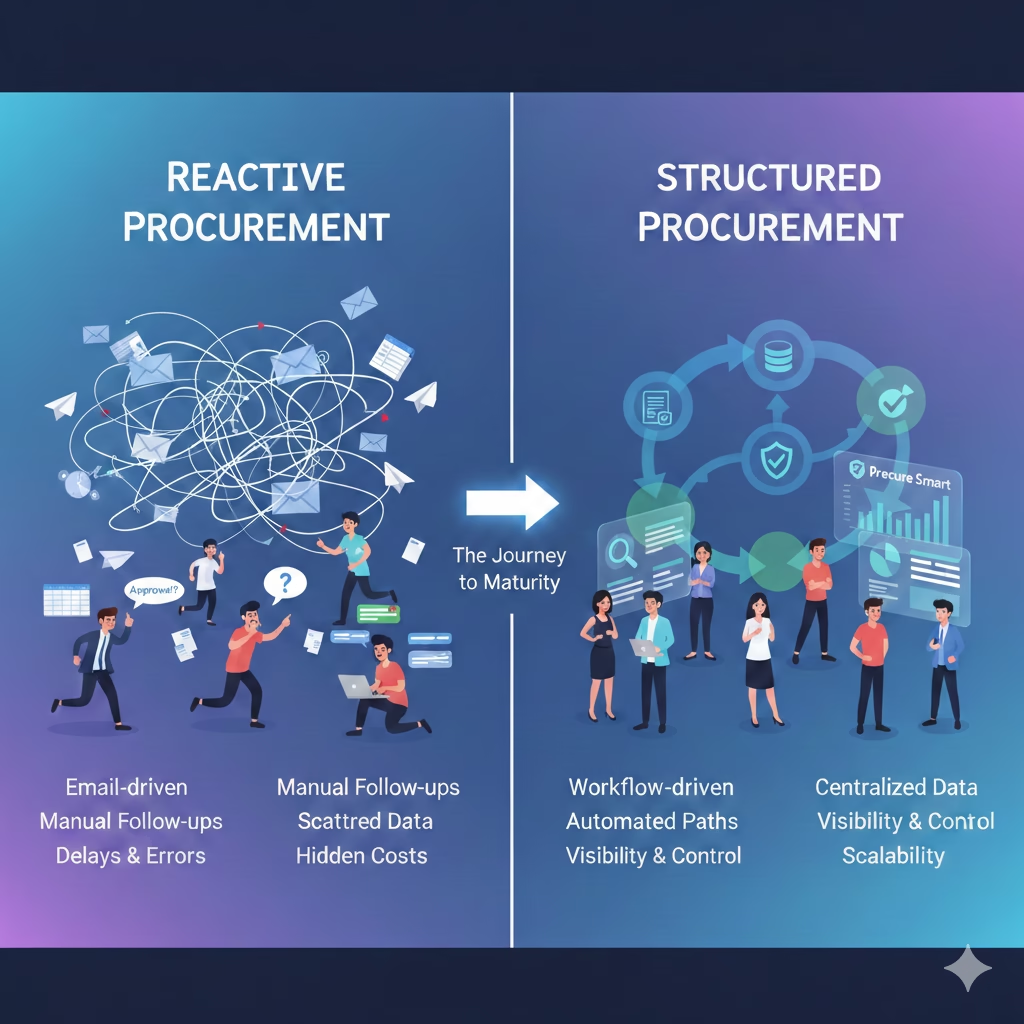
Purchase requests are handled over email. Approvals happen through quick messages. Vendor details are saved in spreadsheets. Someone from the team “keeps track” of what is pending.
At a smaller scale, this works.
But as transaction volumes increase, departments expand, and financial oversight becomes stricter, this informal approach begins to show strain. Delays become frequent. Vendor communication becomes inconsistent. Leadership starts asking for procurement data that takes days to compile.
This is the point where many mid-sized and large enterprises are still operating in what is known as reactive procurement, often without realizing it.
When Procurement Depends on Follow-Ups Instead of Workflows
In a reactive environment, the process moves forward only because people push it forward.
Someone sends a reminder for approval.
Someone checks whether a quotation was received.
Someone calls finance to confirm the status of a payment.
The system itself does not provide visibility, people do.
This creates an operational model where procurement is constantly catching up instead of moving in a predictable flow.
At lower volumes, the effort required to manage this remains hidden. At enterprise scale, it becomes unsustainable.
Why Growth Exposes the Limits of Reactive Procurement
Growth does not just increase the number of purchase requests. It increases complexity.
More departments begin raising procurement needs.
Vendor networks expand.
Contract values become larger.
Compliance requirements become stricter.
In this environment, the lack of structure becomes a risk.
Finance struggles to get a real-time view of committed spend.
Audit preparation becomes a manual exercise.
Leadership decisions are made using incomplete data.
What once felt flexible now feels fragile.
The Hidden Cost of Staying Reactive
Reactive procurement rarely fails dramatically. Instead, it creates small inefficiencies that accumulate over time.
Approvals take longer than expected.
Duplicate purchases occur without being noticed immediately.
Vendor negotiations happen without structured comparison.
Procurement teams spend more time coordinating than analyzing.
Individually, these issues seem manageable. Collectively, they slow down the organization and
weaken financial control.
For growing enterprises, this is not just an operational concern, it is a governance concern.
The First Step Toward Maturity
Moving beyond reactive procurement does not mean adding more people or more manual checkpoints. It means introducing structure.
The moment approval paths are defined, vendor data is centralized, and transactions become traceable, procurement shifts from coordination to control.
Digital procurement platforms such as Procure Smart are often introduced at this stage to replace email-driven processes with workflow-driven operations. The objective is not automation for its own sake, it is creating a predictable environment where procurement data can be trusted.
Because scalability requires visibility.
And visibility requires structure.
A Quiet but Critical Turning Point
Many enterprises continue operating in reactive mode longer than they should because the system has not yet “broken.”
But the real turning point comes when leadership begins to ask for
Real-time procurement visibility
Faster audit readiness
- Accurate committed spend data
Consistent vendor governance
Reactive procurement cannot support these expectations.
Recognizing this stage is the first step in the procurement maturity journey.
What Comes Next
Once structure is introduced, procurement moves into the next stage—controlled procurement, where workflows replace follow-ups and data becomes reliable.
That is the stage where growing enterprises regain operational confidence.
In the next article, we will explore how controlled procurement creates the foundation for scalable, policy-driven purchasing.