In growing enterprises, spending rarely goes out of control overnight.
It starts with urgency.
A department needs a vendor quickly.
A project team places an order outside the standard process to save time.
A location sources locally instead of using an approved supplier.
Individually, these decisions seem harmless — even necessary.
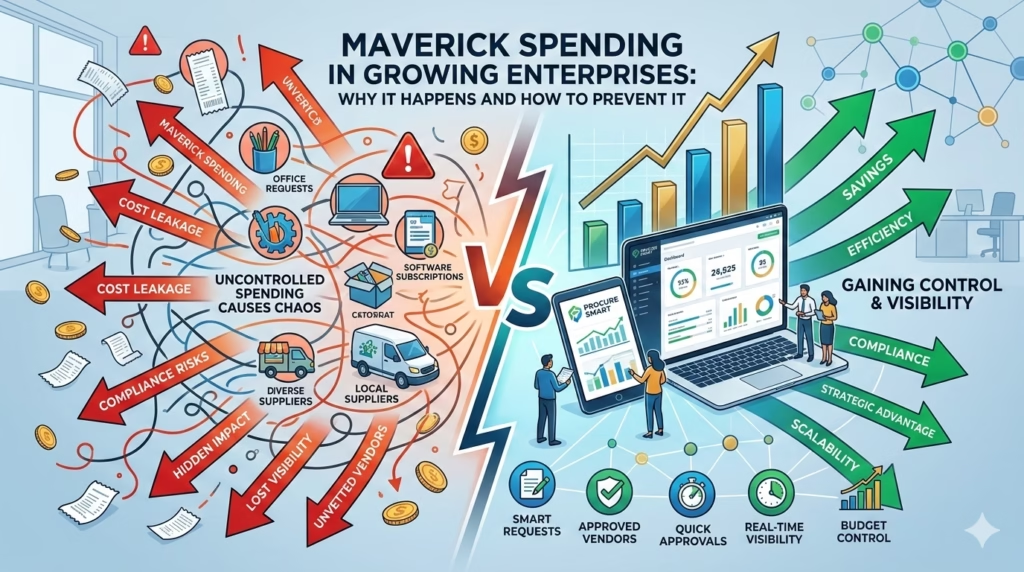
Collectively, they create what procurement and finance teams know as maverick spending: purchases made outside approved contracts, vendors, or procurement workflows.
And for mid-sized and large enterprises, this is not just a process issue.
It is a direct threat to financial control, compliance, and negotiated cost advantages.
Why Maverick Spending Increases as Companies Grow
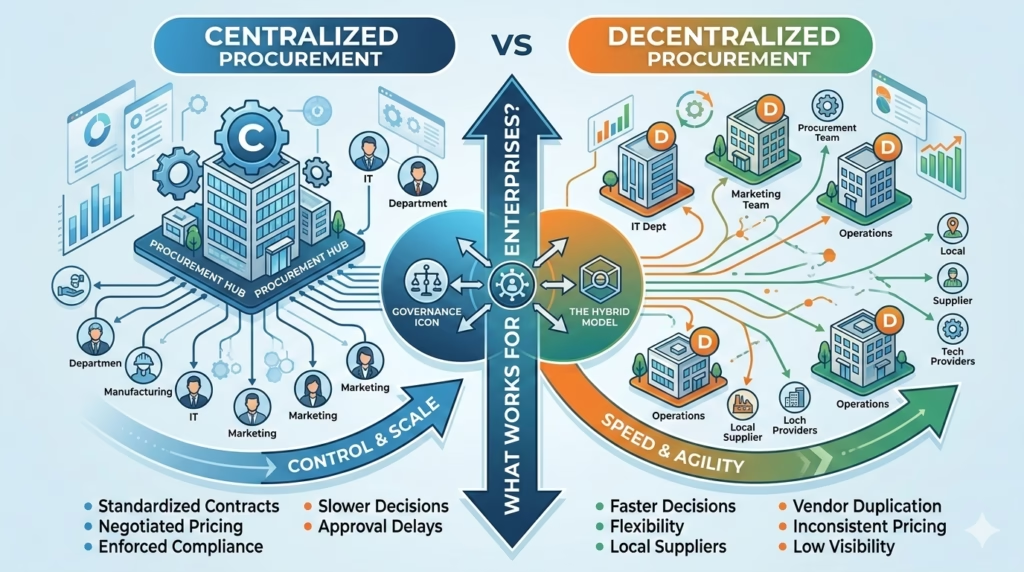
In smaller organizations, purchasing is visible because it happens through a limited number of people.
As the enterprise expands across departments and locations, buying power becomes distributed. Teams are expected to move faster, local decisions increase, and operational priorities often override process discipline.
Without a structured and easy-to-follow procurement system, employees naturally choose the fastest route — not the approved one.
Maverick spending is rarely intentional.
It is usually a symptom of a process that is too slow, too unclear, or too disconnected from business reality.
The Hidden Business Impact
The real cost of maverick spending is not just higher purchase prices.
It appears in multiple ways:
Negotiated contracts lose their value because purchases happen outside them.
Finance loses visibility into committed spend.
Vendor duplication increases across departments.
Compliance risks grow because suppliers are not properly vetted.
Audit preparation becomes more complex and time-consuming.
Most importantly, leadership loses the ability to treat procurement as a strategic lever for cost optimization.
Why Policy Alone Doesn’t Work
Many enterprises try to control maverick spending by introducing stricter policies.
But policies without systems depend on manual enforcement.
Employees still face the same reality — they need a fast, simple way to raise and track their requirements. If the official process feels slower than the alternative, they will bypass it.
Control does not come from restriction.
It comes from making the right process the easiest one to follow.
Creating a Procurement Environment That Employees Actually Use
Enterprises that successfully reduce maverick spending focus on experience as much as governance.
They create a procurement flow where:
Raising a request takes minutes, not days
Approved vendors are easily accessible
Approval status is visible in real time
Urgent purchases follow a defined fast-track path
When the structured process becomes faster and more transparent than informal purchasing, adoption happens naturally.
This is when compliance stops being enforced and starts being built into daily operations.
The Role of Real-Time Visibility
One of the biggest drivers of maverick spending is the lack of real-time insight.
If procurement and finance teams see transactions only after they are completed, control becomes reactive.
With real-time visibility:
Off-contract purchases can be identified early
Department-wise spending patterns become clear
Vendor usage can be standardized
Leadership gains control over financial commitments
The conversation shifts from “Why did this happen?”
to “How do we prevent it systematically?”
Enabling Control Without Slowing the Business
For growing enterprises, the objective is not to eliminate flexibility. It is to ensure that every purchase — regardless of origin — follows a compliant and traceable path.
Digital procurement platforms such as Procure Smart enable this by embedding policy into the workflow itself.
Employees can raise requests easily.
Approvals are automatically routed based on value and department.
Only compliant vendors are available for selection.
Every transaction is visible to finance in real time.
This creates a procurement environment where speed and control coexist.
From Spend Leakage to Strategic Advantage
When maverick spending is brought under control:
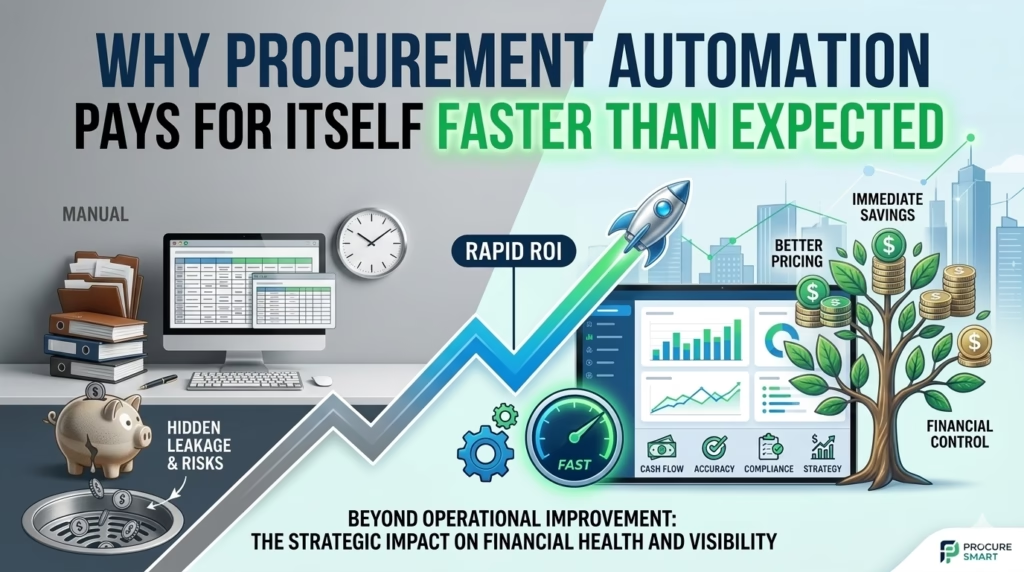
Contracted pricing delivers full value
Cash flow planning becomes more accurate
Vendor relationships become stronger and more consistent
Audit readiness improves significantly
Procurement moves from being a monitoring function to a driver of measurable savings.
For mid-sized and large enterprises, this is not just about cost control — it is about building a scalable, governance-ready organization.
Taking the First Step Toward Spend Control
Maverick spending is not a people problem.
It is a process and visibility problem.
Enterprises that address it successfully do not rely on stricter enforcement. They create a procurement system that makes compliant purchasing the default path.
See how Procure Smart helps growing enterprises eliminate off-contract spending, standardize vendor usage, and gain real-time control over procurement.
Request a walkthrough to explore how structured purchasing works in practice.