As organizations grow, procurement becomes more complex. New departments emerge, vendor networks expand, and purchasing decisions start happening across multiple teams and locations. At this stage, enterprises often face an important strategic question:
Should procurement remain centralized under a single team, or should departments manage their own purchasing decisions?
Both approaches offer advantages, but neither works perfectly on its own. Understanding how centralized and decentralized procurement models function helps enterprises design a procurement system that balances control, speed, and visibility.
What Is Centralized Procurement?
In a centralized procurement model, all purchasing decisions are managed through a single procurement department. This team is responsible for vendor selection, contract negotiations, purchase approvals, and supplier management across the organization.
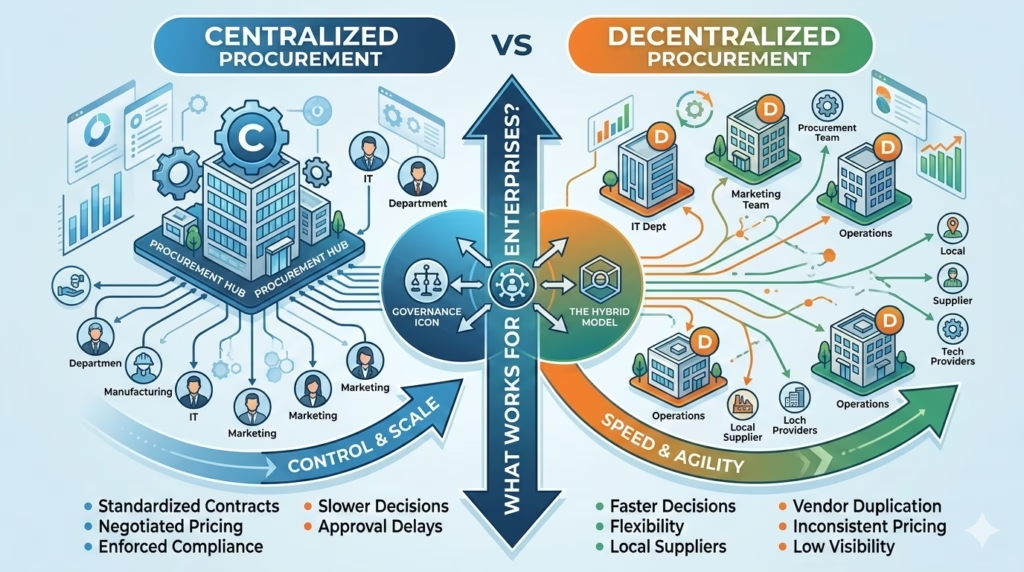
The primary advantage of centralization is control. Procurement teams can standardize vendor contracts, enforce purchasing policies, and negotiate better pricing by consolidating demand across departments.
For enterprises managing large supplier networks, centralized procurement also improves compliance. Vendor onboarding processes, contract management, and purchasing policies are applied consistently across the organization.
However, centralization can sometimes slow operations. When every request must pass through a single team, departments may experience delays, especially during periods of high purchasing activity.
What Is Decentralized Procurement?
In a decentralized procurement model, purchasing decisions are distributed across departments, business units, or regional teams. Each unit has the authority to source vendors and manage purchasing based on its specific needs.
This model provides flexibility and speed. Teams closer to operational requirements can make faster decisions, work with local suppliers, and respond quickly to changing demands.
Decentralization is often common in large organizations with multiple locations or specialized departments. It allows teams to operate more independently and reduces the burden on a single procurement function.
However, decentralization also introduces challenges. Without clear oversight, vendor duplication increases, pricing negotiations become inconsistent, and finance teams may struggle to maintain visibility over organizational spending.
The Risks of Choosing Only One Approach
Enterprises that rely entirely on centralized procurement may struggle with operational agility. Departments may feel disconnected from purchasing decisions, and procurement teams can become overwhelmed by approval requests.
On the other hand, fully decentralized procurement can create governance issues. Vendor contracts may vary widely, purchasing policies may be inconsistently applied, and financial oversight becomes difficult.
Neither model alone provides the balance that modern enterprises require.
What organizations increasingly need is a structure that combines the strengths of both approaches.
The Hybrid Model: Control with Flexibility
Many successful enterprises now adopt a hybrid procurement model. In this structure, procurement policies, vendor standards, and financial oversight remain centralized, while departments maintain the ability to initiate purchasing requests.
This approach allows organizations to preserve speed and autonomy while maintaining control over vendors, contracts, and spending.
For example, departments can raise purchase requests or evaluate vendor options, but approvals follow standardized workflows. Vendor onboarding remains centrally governed to ensure compliance, while procurement data remains visible across the organization.
The result is a procurement environment where flexibility does not compromise governance.
Why Technology Plays a Critical Role
Managing a hybrid procurement model manually is extremely difficult. Without the right systems, organizations end up with fragmented communication, incomplete vendor records, and delayed approvals.
Digital procurement platforms solve this challenge by creating a structured environment where decentralized purchasing can happen within centralized governance.
With a procurement platform in place, departments can raise requests easily, while approval workflows, vendor policies, and financial controls remain consistent across the organization.
This ensures that every transaction is visible, traceable, and aligned with enterprise procurement strategy.
Building the Right Procurement Structure for Growth
For mid-sized and large enterprises, the question is no longer whether procurement should be centralized or decentralized. The real challenge is creating a procurement system that provides both control and operational flexibility.
By combining centralized governance with decentralized request management, organizations can maintain strong vendor oversight, ensure financial visibility, and support faster business operations.
Solutions like Procure Smart help enterprises achieve this balance by digitizing procurement workflows, centralizing vendor management, and enabling real-time visibility across departments and locations.
This allows procurement teams to maintain control while empowering business units to operate efficiently.
The Future of Enterprise Procurement
Modern procurement is moving beyond rigid organizational models. Enterprises are increasingly adopting digital platforms that allow purchasing activity to occur across departments while maintaining centralized oversight.
In this environment, procurement becomes not just a purchasing function, but a strategic capability that supports operational efficiency, financial planning, and vendor governance.
Organizations that adopt this balanced approach are better equipped to scale procurement alongside business growth.