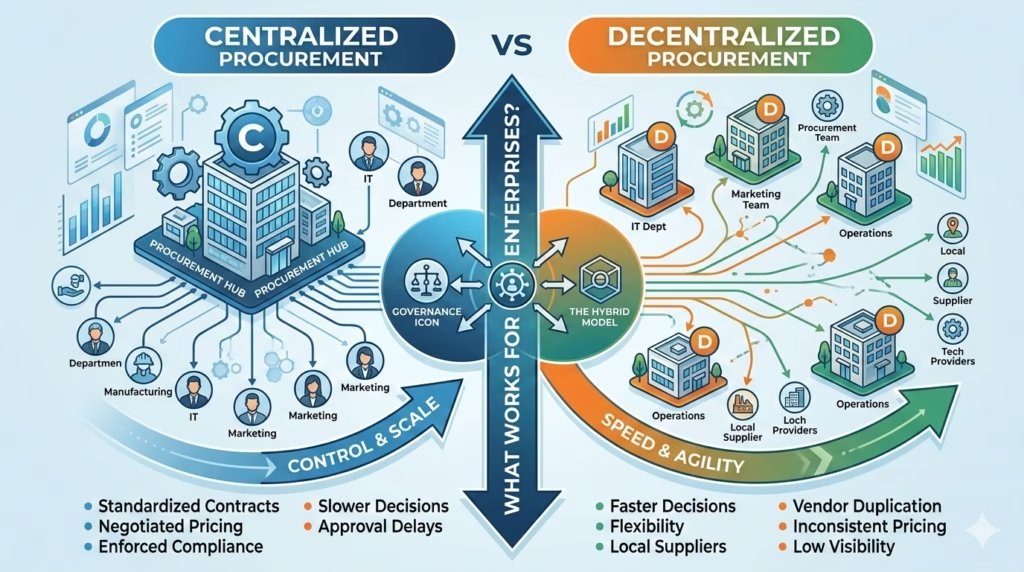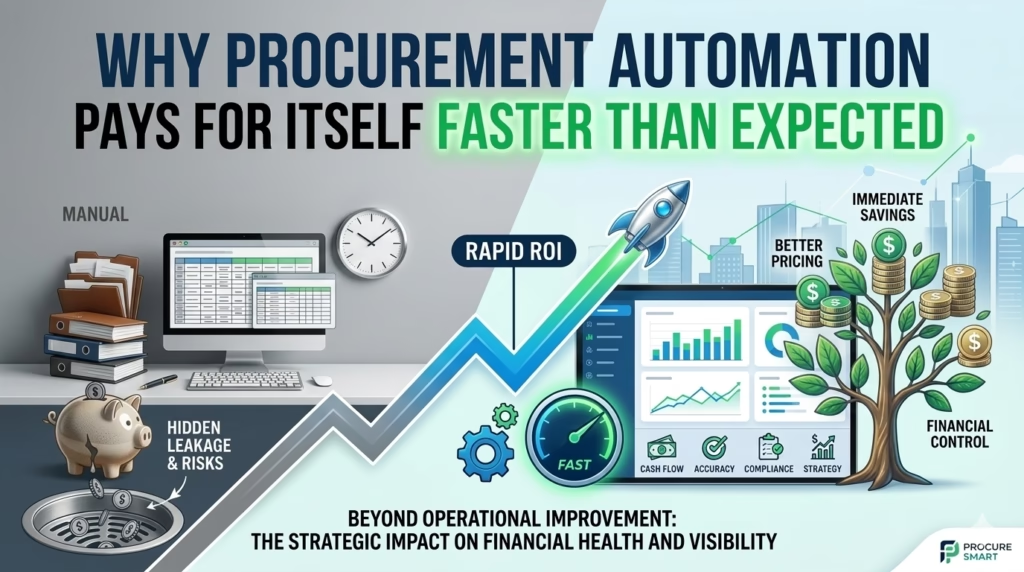
As businesses grow, procurement becomes more complex. More vendors, more approvals, higher purchase volumes, stricter compliance requirements — everything increases. What once worked through emails and spreadsheets quickly becomes chaotic. Delays increase, accountability weakens, and compliance risks multiply. The real challenge isn’t just scaling procurement. It’s scaling without losing control. In 2026, organizations are realizing that procurement growth must be supported by structure, automation, and visibility. Otherwise, expansion leads to inefficiency instead of progress.
Why Procurement Breaks During Growth
Many companies design procurement processes for their current size — not their future scale.
When business expands, the same manual workflows start to fail.
Common symptoms include:
-
Approval bottlenecks as request volumes increase
-
Approval bottlenecks as request volumes increase
-
Duplicate or unauthorized purchases
-
Difficulty tracking spend across departments
-
Scalability as your customer base growsAudit stress caused by missing documentation
At a small scale, these issues may seem manageable. At enterprise scale, they become serious operational and compliance risks.
Control Doesn’t Mean Slowing Down
There’s a common misconception that tighter procurement control slows down operations. In reality, poorly structured procurement causes the most delays. Manual approvals, scattered vendor data, and disconnected systems create friction at every step.
A scalable procurement system is not about adding more checkpoints — it’s about creating
clear workflows that move faster because they are structured.
When procurement processes are automated and standardized, approvals route automatically,
vendor data stays centralized, and every action is traceable. Speed improves because confusion disappears.
What a Scalable Procurement System Looks Like
To scale without losing control, procurement needs three core pillars:
1. Process Standardization
Every purchase request should follow a defined workflow. Clear approval hierarchies and policy enforcement ensure consistency across departments.
2. Centralized Vendor Management
Vendor onboarding, compliance documents, quotations, and purchase orders must live in one system. This eliminates fragmented communication and reduces disputes.
3. Real-Time Visibility
Leadership and finance teams need instant insight into spend, pending approvals, and procurement status. Without visibility, growth leads to financial blind spots. Modern procurement platforms like Procure Smart are designed to support this structure — ensuring procurement operations remain controlled even as volumes increase.
Technology as the Enabler of Controlled Growth
Scaling procurement manually creates more administrative work. Scaling with technology creates clarity.
Common symptoms include :
-
Routing approvals based on predefined policies
-
Generating audit-ready logs automatically
-
Comparing vendor quotations systematically
-
Integrating with ERP systems for real-time financial alignment
Instead of depending on individuals to remember processes, the system enforces them.
Why This Matters in 2026
In today’s business environment, compliance expectations are higher, procurement volumes are growing, and digital transformation is accelerating. Companies can no longer afford procurement processes that collapse under scale.
A procurement system that scales without losing control ensures :
-
Stronger compliance
-
Faster procurement cycles
-
Reduced financial risk
-
Better vendor relationships
- Improved decision-making
Growth should increase efficiency — not create operational stress.
Final Thought
Scaling procurement is inevitable. Losing control doesn’t have to be.
Businesses that invest in structured, automated procurement systems position themselves for sustainable growth. With the right foundation, procurement becomes a strategic function — one that supports expansion while maintaining transparency, accountability, and compliance.